The Herbarium
Part I · Medicinal herbs
Herb. No. 094
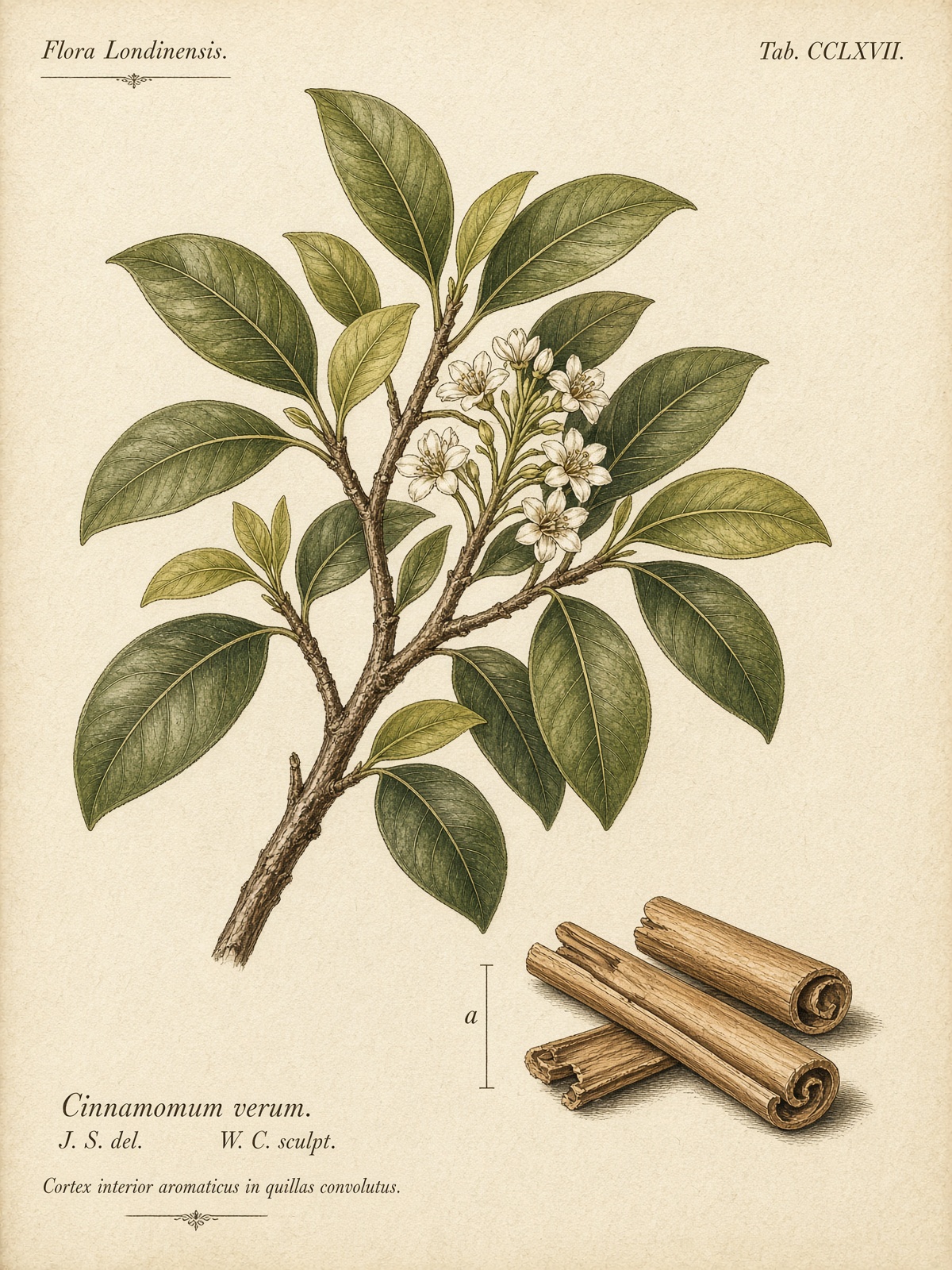
Cinnamon
Cinnamomum verum
Lauraceae
The inner bark that built a trade — blood-sugar folklore, a kitchen spice, and a tropical tree.
True cinnamon (C. verum, Sri Lanka) is the kitchen spice. Cassia (C. cassia) is the common cheaper bark and higher in coumarin.
- Parts used
- Inner bark
- Traditional notes
- Culinary spice · Cold digestion · Blood-sugar folklore (food amounts, not a replacement for diabetes care)
- Grow · USDA 6b
- Tropical tree, USDA 10–12; a greenhouse or bright pot north A nursery plant if you can find C. verum. This is a house-tree experiment. In work: Jan · Feb · Mar · Apr · May · Jun · Jul · Aug · Sep · Oct · Nov · Dec
- Harvest
- Bark from coppiced stems in the tropics after several years — not a first-season crop.
- Buy the spice. Growing true cinnamon outside the tropics is a hobby tree.
- Humidity tray. Dry apartments crisp the leaves.
- Read the jar: verum vs cassia is the safety point.
Safety
High daily cassia as a ‘hack’ Liver disease (coumarin)
Lore
True cinnamon is Sri Lankan C. verum, thin and sweet; cassia is the supermarket bark with more coumarin. Wars were fought for both. A stick in a pot is food; a tablespoon of cassia a day is a liver conversation.
The Herbarium — a teaching catalog, not a clinic. Traditional use is history, not a prescription. USDA 6b dates are a week either way, not a promise. Do not eat, drink, or harvest a plant you cannot name.