The Herbarium
Part IV · Fruit & vegetable
Herb. No. 230
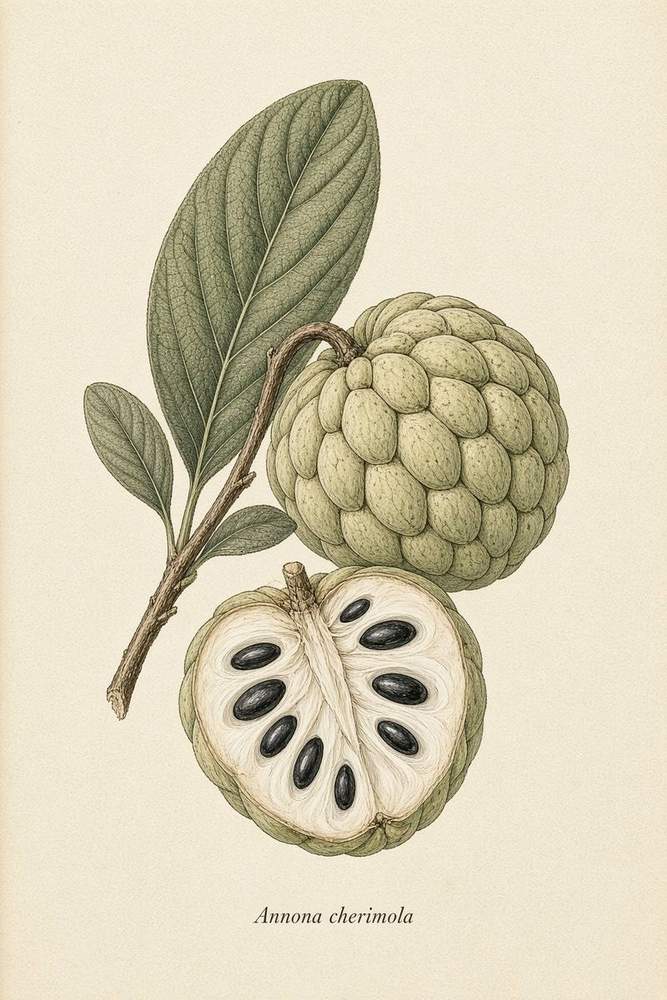
Cherimoya
Annona cherimola
Annonaceae
An Andean custard apple — spoon the ripe white flesh, spit every black seed, and leave the leaf off the kettle.
Ripe flesh is food. Seeds and leaves are not a tea — they are a traditional insect story, not a dessert. Custard apple cousins share the caution.
- Parts used
- Ripe flesh
- Traditional notes
- Kitchen fruit · Traditional Andean dessert
- Grow · USDA 6b
- Subtropical highland tree, USDA 9–11. Hates hard frost and extreme heat equally. A named graft. Hand-pollinate if fruit set is shy (a paintbrush at dusk). In work: Jan · Feb · Mar · Oct · Nov · Dec
- Harvest
- When it just yields. Ripen on the counter if mature-hard.
- Highland, not jungle. It likes a cool night.
- A black speckle on the skin can still be fine; a black mush is not.
Safety
Seeds chewed or crushed Leaf as tea Known Annona allergy
Lore
Quechua chirimuya, cold seeds — the highlands. Spanish took it to the Mediterranean. Mark Twain said it was the most delicious fruit known; he had not been forced to eat a shipped, underripe one. Atemoya is a hybrid with sugar apple. Soursop (guanabana) is a hotter-climate cousin with its own leaf folklore, not this plate.
The Herbarium — a teaching catalog, not a clinic. Traditional use is history, not a prescription. USDA 6b dates are a week either way, not a promise. Do not eat, drink, or harvest a plant you cannot name.