The Herbarium
Part IV · Fruit & vegetable
Herb. No. 236
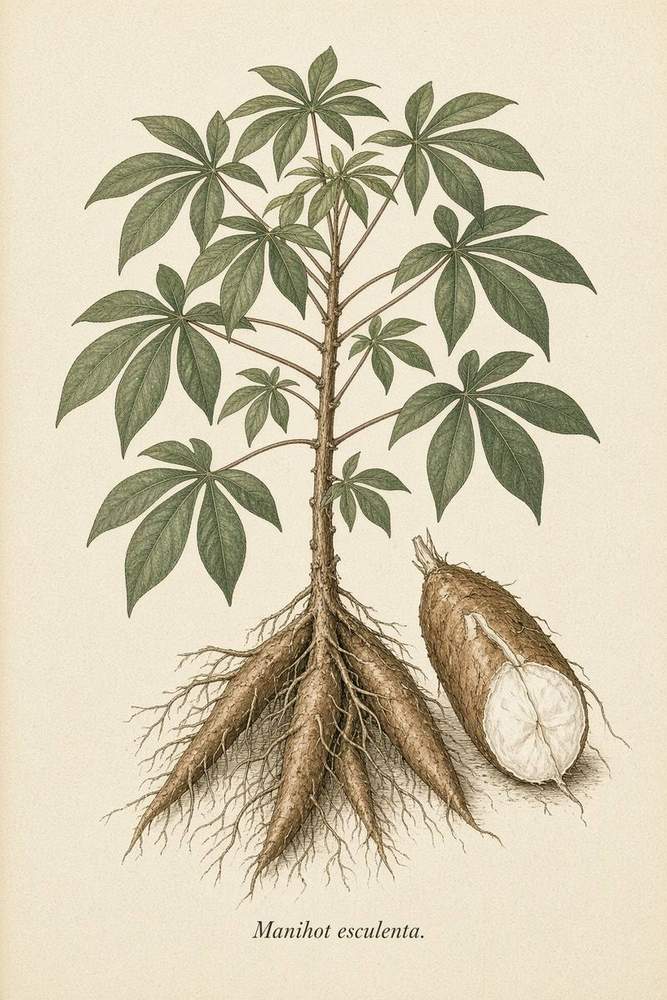
Cassava
Manihot esculenta
Euphorbiaceae
Yuca — a tropical spurge whose root feeds hundreds of millions once it is peeled and cooked, and a poison if you treat it like an apple.
Cooked, properly prepared root is a world staple. Raw and bitter types carry cyanogenic glycosides — this is a processed food crop, not a raw nibble or a juice.
- Parts used
- Prepared root, cooked
- Traditional notes
- Staple starch · Fufu, casabe, tapioca · Traditional processed root of the tropics
- Grow · USDA 6b
- Tropical shrub, USDA 9–11. Stem cuttings in heat. Stem cuttings of a known sweet type if you are a home grower. Know which you planted. In work: Sep · Oct · Nov
- Harvest
- 8–18 months, before the root lignifies. Cook soon after digging — the root does not keep like a potato.
- Home growers should plant named sweet types and still cook them thoroughly.
- The waxed grocery yuca is sweet type, already a food — peel and boil.
Safety
Raw root or raw juice Bitter cassava without a known processing method A sole staple without other protein and iodine — a deficiency history exists
Lookalikes
- Sweet potato — Two tropical roots. One is a breakfast. Bitter cassava is cyanogenic until it is prepared correctly — not a casual swap.
Lore
Tupi manióca. Spanish yuca (not yucca, the desert lily). Portuguese mandioca. The Portuguese carried it to Africa, where it outyielded many local starches on poor ground. Konzo is a village-neurology story of bitter cassava processed in haste during hunger — a reason this plate is caution, not a reason to fear a boiled grocery yuca fry.
The Herbarium — a teaching catalog, not a clinic. Traditional use is history, not a prescription. USDA 6b dates are a week either way, not a promise. Do not eat, drink, or harvest a plant you cannot name.