The Herbarium
Part II · Medicinal fungi
Herb. No. 118
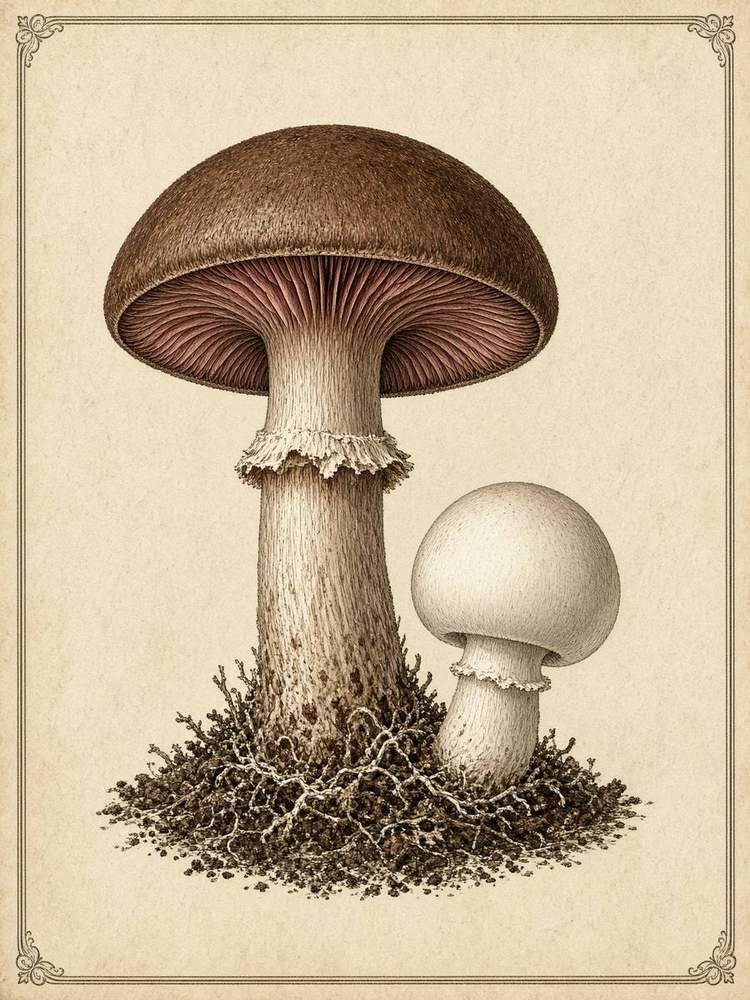
Button mushroom
Agaricus bisporus
Agaricaceae
The same fungus three times — button, cremini, portobello — a kitchen mushroom you can grow on a block.
The cultivated supermarket mushroom (button, cremini, portobello — one species). Not a wild Agaricus you cannot name.
- Parts used
- Fruiting body
- Traditional notes
- Kitchen · Traditional food of recovery
- Grow · USDA 6b
- Indoor compost crop. Cool, 55–65°F fruiting. A kit or spawn on pasteurized compost. In work: Jan · Feb · Mar · Apr · May · Jun · Jul · Aug · Sep · Oct · Nov · Dec
- Harvest
- Buttons while closed; cremini as the cap colors; portobello when open, before they flatten to spore.
- A kit is how most kitchens meet a crop.
- Twist, don’t tear the block to pieces.
- This is not a lawn mushroom hunt.
Safety
Mushroom allergy Wild Agaricus you cannot name
Lookalikes
- Fly agaric — A white or orange cap in grass is not Agaricus. Fly agaric and its deadly cousins still get eaten by people who trusted a photograph.
- Psilocybe mushrooms — Little brown mushrooms are a legal and medical problem, not a pizza topping. This catalog will name them for education. It will not tell you to eat them.
Lore
Paris grew this fungus in abandoned limestone quarries until ‘champignon de Paris’ was a trade. The white button is a 1926 sport from a brown line; portobello is just the same mushroom allowed to grow up. One species, three grocery names, a century of marketing.
The Herbarium — a teaching catalog, not a clinic. Traditional use is history, not a prescription. USDA 6b dates are a week either way, not a promise. Do not eat, drink, or harvest a plant you cannot name.