The Herbarium
Part I · Medicinal herbs
Herb. No. 110
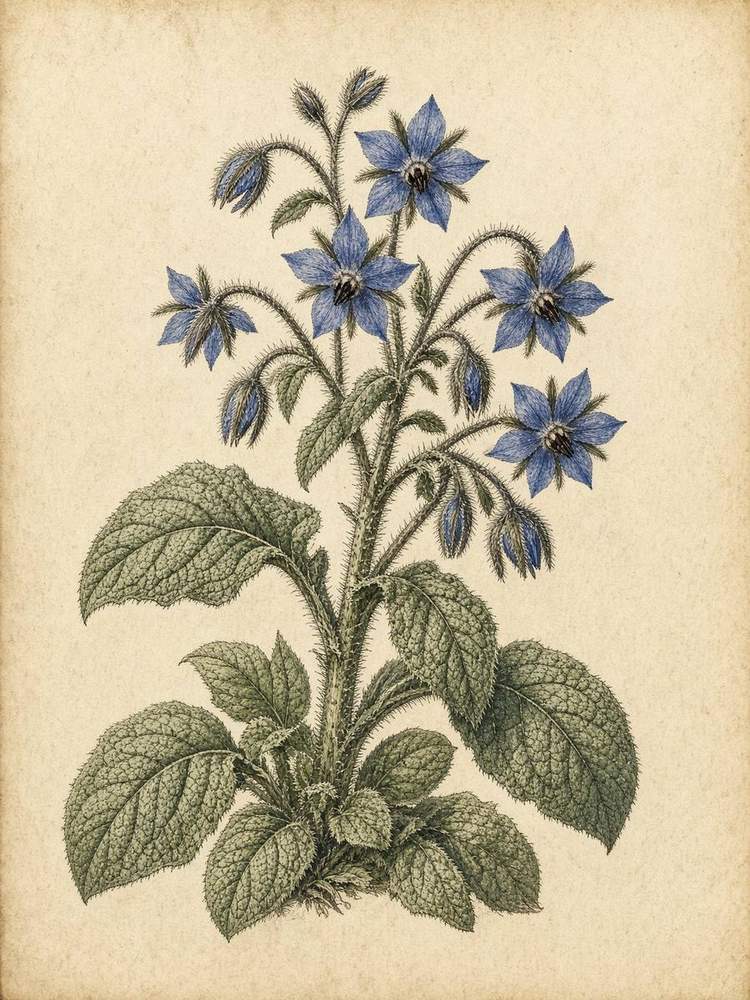
Borage
Borago officinalis
Boraginaceae
Cucumber-leaf and a blue star flower — a kitchen curiosity with a liver caveat if you make a habit of it.
Culinary flower and young leaf in small amounts. The plant contains pyrrolizidine alkaloids — not a daily pot-herb.
- Parts used
- Flower · Young leaf (sparingly)
- Traditional notes
- Kitchen garnish · Traditional courage folklore · Bee forage · Cooling summer leaf
- Grow · USDA 6b
- Annual. Self-sows in USDA 6–10. Direct-sow after frost. It hates transplanting. In work: Apr · May · Jun · Jul · Aug
- Harvest
- Flowers as they open; youngest leaves only.
- One plant is a bouquet. Six is a forest of bristles.
- The bees will find it before you do.
- Gloves help if the hairs bother you.
Safety
Pregnancy Liver disease A daily borage pot
Companions
Plant with Anise hyssop, Bee balm, Calendula, Clove pink, Cornflower, Cosmos.
Lookalikes
- Comfrey — Bristly borages. Internal comfrey is a pyrrolizidine problem. Borage leaf is a cucumber nibble — and still not a daily tea.
Lore
Medieval cups were floated with borage ‘for courage’ — ego borago, gaudia semper, ‘I, borage, bring always courage.’ The blue stars still turn up in Pimm’s. The plant’s other gift is less festive: pyrrolizidine alkaloids, which is why this plate stays a garnish.
The Herbarium — a teaching catalog, not a clinic. Traditional use is history, not a prescription. USDA 6b dates are a week either way, not a promise. Do not eat, drink, or harvest a plant you cannot name.