The Herbarium
Part IV · Fruit & vegetable
Herb. No. 211
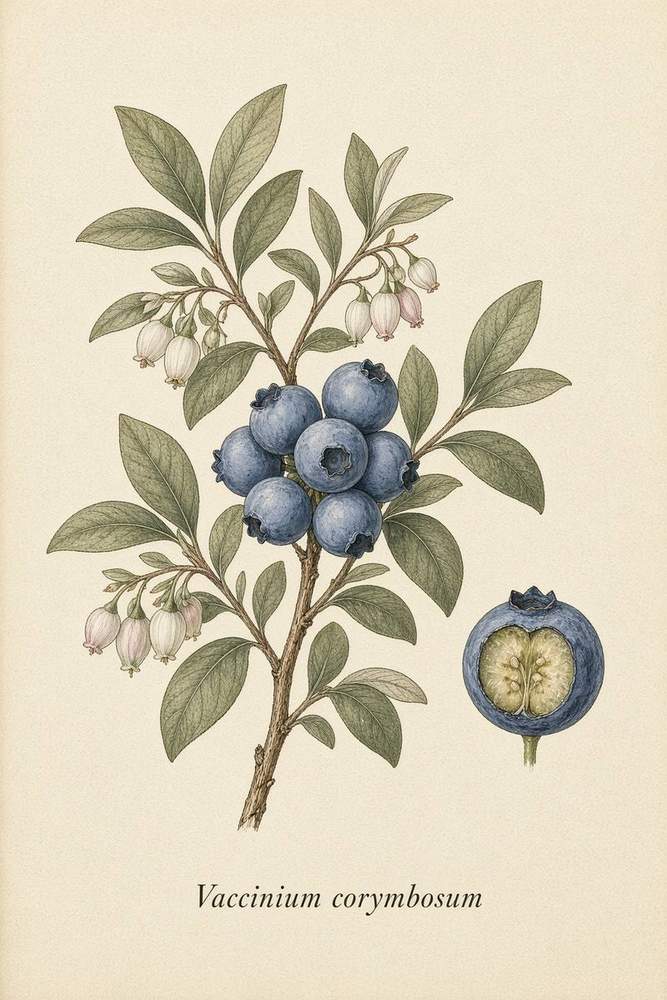
Blueberry
Vaccinium corymbosum
Ericaceae
An eastern acid-soil berry with a bloom on the skin — a pie fruit that will not grow in lime.
Ripe fruit is food. This is highbush garden blueberry, not a wild lowbush strip of someone else’s barrens.
- Parts used
- Ripe fruit
- Traditional notes
- Kitchen fruit · Traditional dried winter berry · Pie and jam
- Grow · USDA 6b
- Shrub, USDA 4–7 highbush; rabbiteye 7–9 A nursery bush. Two varieties for a full set. In work: Jun · Jul · Aug
- Harvest
- Wait a few days after they turn blue — sugar lags color.
- Pine fines and sulfur, not lime.
- Net or share with the catbird.
Safety
Known blueberry allergy (rare)
Companions
Plant with Pine, Yarrow.
Keep apart from Tomato.
Lookalikes
- Deadly nightshade — Shiny black berries in a hedge are not Vaccinium. Atropa is a tropane. A handful has ended walks.
Lore
Indigenous nations of the east dried them into cakes and winter meat. Elizabeth White and Coville made a farm crop of the highbush in New Jersey in the 1910s. The wild Maine lowbush harvest is a different, older economy. The bloom on the berry is why a washed pint looks duller and why a dusty pint looks like money.
The Herbarium — a teaching catalog, not a clinic. Traditional use is history, not a prescription. USDA 6b dates are a week either way, not a promise. Do not eat, drink, or harvest a plant you cannot name.