The Herbarium
Part I · Medicinal herbs
Herb. No. 121
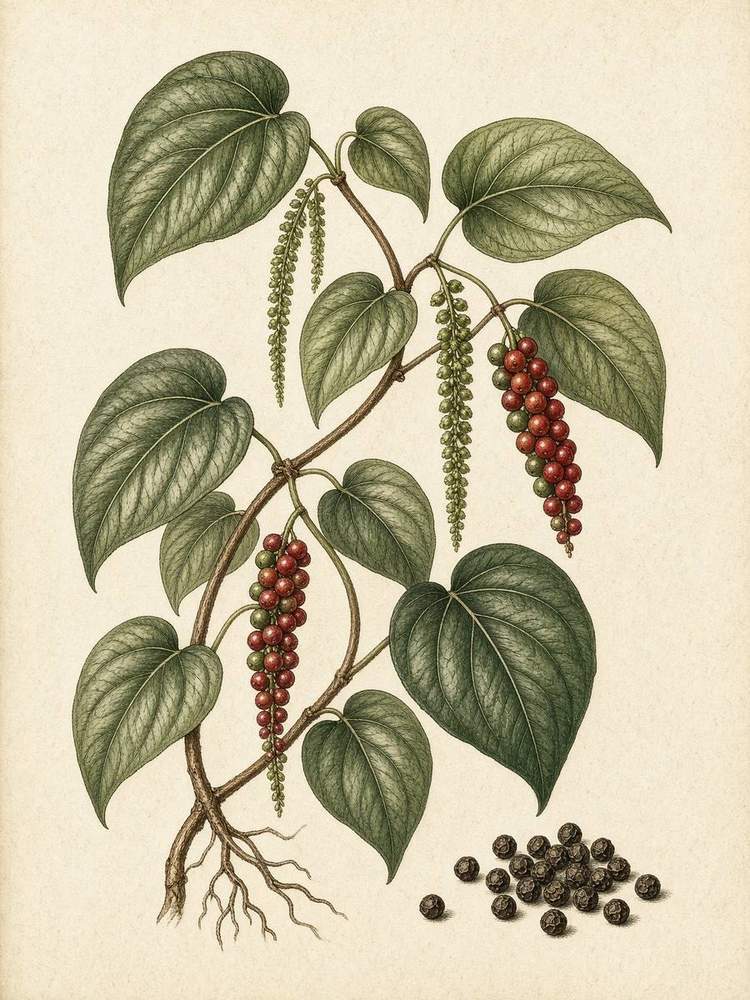
Black pepper
Piper nigrum
Piperaceae
The berry that made the spice routes — a tropical vine whose dried fruit is still the world’s default heat.
Culinary peppercorn. White, green, and black are one vine at different ripeness and processing.
- Parts used
- Dried fruit (peppercorn)
- Traditional notes
- Kitchen spice · After a heavy meal · Traditional digestive heat
- Grow · USDA 6b
- Tropical evergreen vine, USDA 10–12; greenhouse north A nursery vine if you have a conservatory. Most kitchens buy the berry. In work: Jan · Feb · Mar · Apr · May · Jun · Jul · Aug · Sep · Oct · Nov · Dec
- Harvest
- Green spikes for green pepper; almost-ripe for black; fully red for white.
- A jar from a grocer is the honest harvest north of the tropics.
- If a vine is offered, it wants a winter above 60°F and a tree to climb.
- Grind at the table. Pre-ground pepper is a ghost.
Safety
Active gastric ulcer in very large medicinal amounts Pepper oil internally
Lore
Rome paid in gold for Malabar pepper; Alaric the Visigoth took a ton of it as ransom in 408. Medieval Europe used it the way we use salt — as wealth you could taste. The phrase ‘peppercorn rent’ is a joke about a contract that costs almost nothing, which only works if you have forgotten what a peppercorn used to cost.
The Herbarium — a teaching catalog, not a clinic. Traditional use is history, not a prescription. USDA 6b dates are a week either way, not a promise. Do not eat, drink, or harvest a plant you cannot name.