The Herbarium
Part I · Medicinal herbs
Herb. No. 064
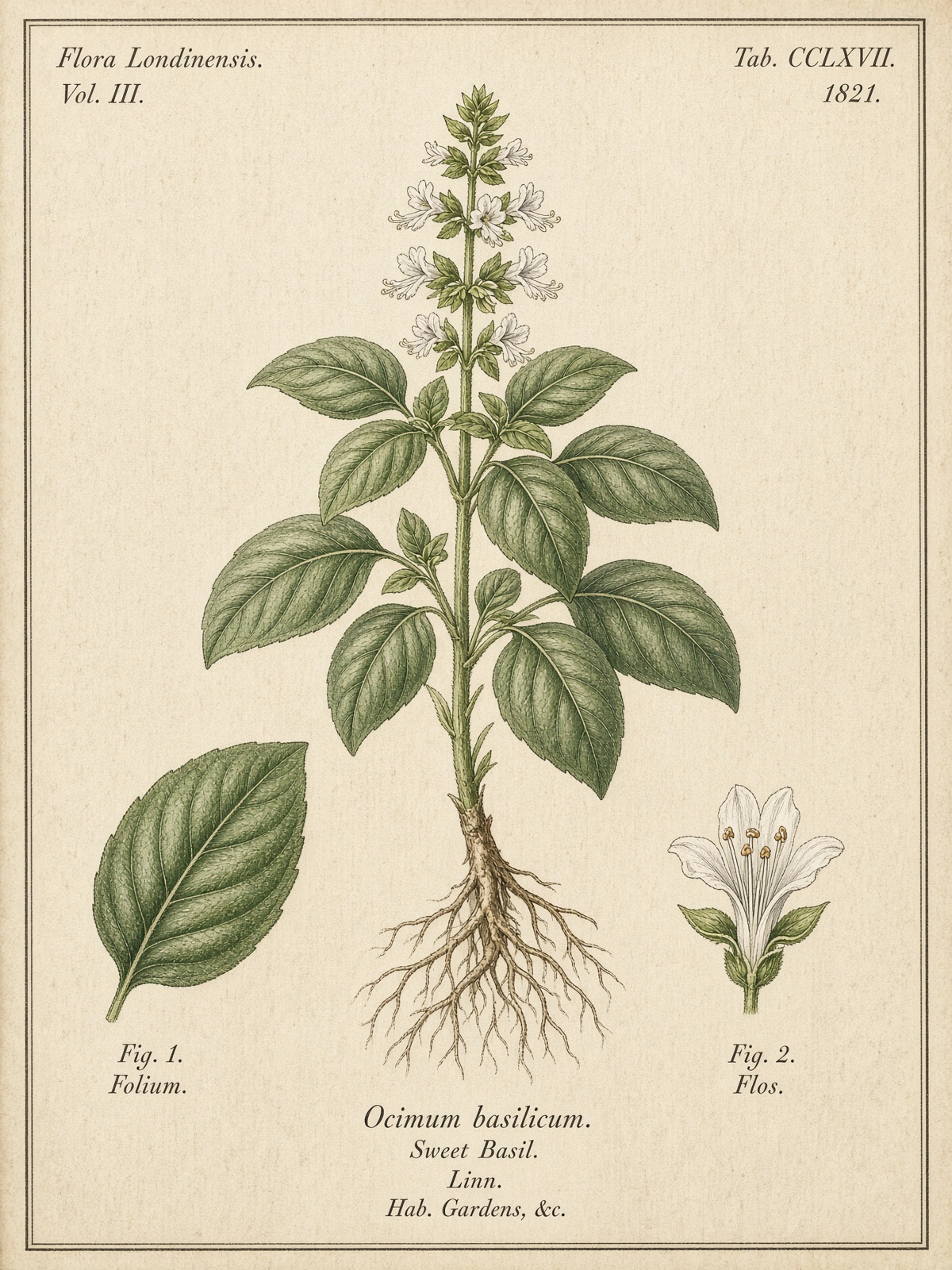
Sweet basil
Ocimum basilicum
Lamiaceae
The pesto leaf — a cooling kitchen mint for digestion and summer nerves.
Culinary annual. Distinct from holy basil (tulsi).
- Parts used
- Leaf · Flowering tops
- Traditional notes
- After a rich meal · Mild nervous tension · Kitchen seasoning · Mouth freshness
- Grow · USDA 6b
- Tender annual. Frost kills it. After last frost, or start indoors 4 weeks prior. In work: May · Jun · Jul · Aug · Sep
- Harvest
- Pinch tips before flower for the sweetest leaf.
- Heat, sun, and pinching. Cold nights stall it.
- Water the soil, not the leaves, if you want to avoid spots.
- A pot on the kitchen step beats a neglected row.
Safety
Essential oil internally
Companions
Plant with Borage, Calendula, Cayenne, Eggplant, French marigold, Garlic.
Keep apart from Fennel.
Lookalikes
- Holy basil — Sweet basil and holy basil are both Ocimum, and both are food — but tulsi is a different chemistry and a different kettle. Recipes are not interchangeable.
Lore
In some Greek villages it is still a royal plant; in India a close cousin is a goddess. Genovese pesto is a Ligurian invention that made Ocimum basilicum a summer annual in every temperate garden. Cold nights blacken it for spite.
The Herbarium — a teaching catalog, not a clinic. Traditional use is history, not a prescription. USDA 6b dates are a week either way, not a promise. Do not eat, drink, or harvest a plant you cannot name.