The Herbarium
Part IV · Fruit & vegetable
Herb. No. 216
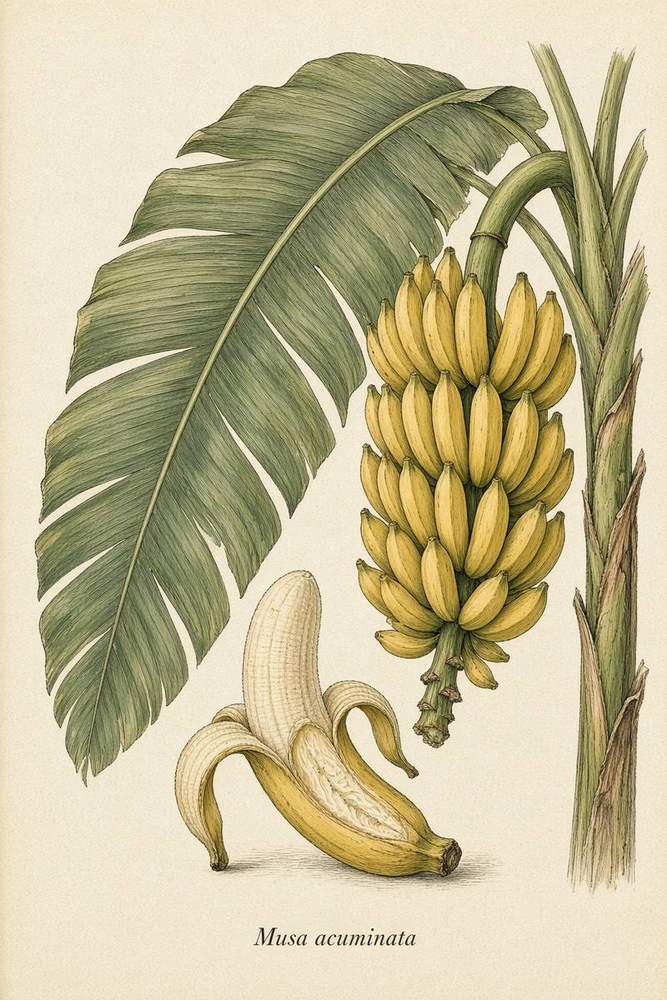
Banana
Musa acuminata
Musaceae
The tropical berry we treat as a fruit — a seedless clone that travels green and ripens in the bowl.
Ripe fruit is food. This plate is the dessert banana, not a wild seeded Musa. Plantain is a starchier sibling in the same kitchen.
- Parts used
- Ripe fruit
- Traditional notes
- Kitchen fruit · Traditional tropical staple (and plantain as starch)
- Grow · USDA 6b
- Tropical perennial, USDA 9–11; a pot or a greenhouse north. Frost cuts it to the ground. A pup (sucker) from a named clone. Seed is for breeders. In work: Jan · Feb · Mar · Apr · May · Jun · Jul · Aug · Sep · Oct · Nov · Dec
- Harvest
- When the bunch fills and the first fingers lighten. Ripen off the stem.
- Wind shreds the leaf. A courtyard helps.
- One fruiting stem, then a pup takes over.
Safety
Known banana latex-fruit allergy A green-banana protocol as medicine
Lore
The Gros Michel was the banana until a fungus ate it. Cavendish is the understudy that got the job, and the same fungus is now in the wings. Arabic muz and the botanical Musa may share a root. Plantain is not a failure to ripen; it is a cooking banana with a different assignment.
The Herbarium — a teaching catalog, not a clinic. Traditional use is history, not a prescription. USDA 6b dates are a week either way, not a promise. Do not eat, drink, or harvest a plant you cannot name.