The Herbarium
Part IV · Fruit & vegetable
Herb. No. 205
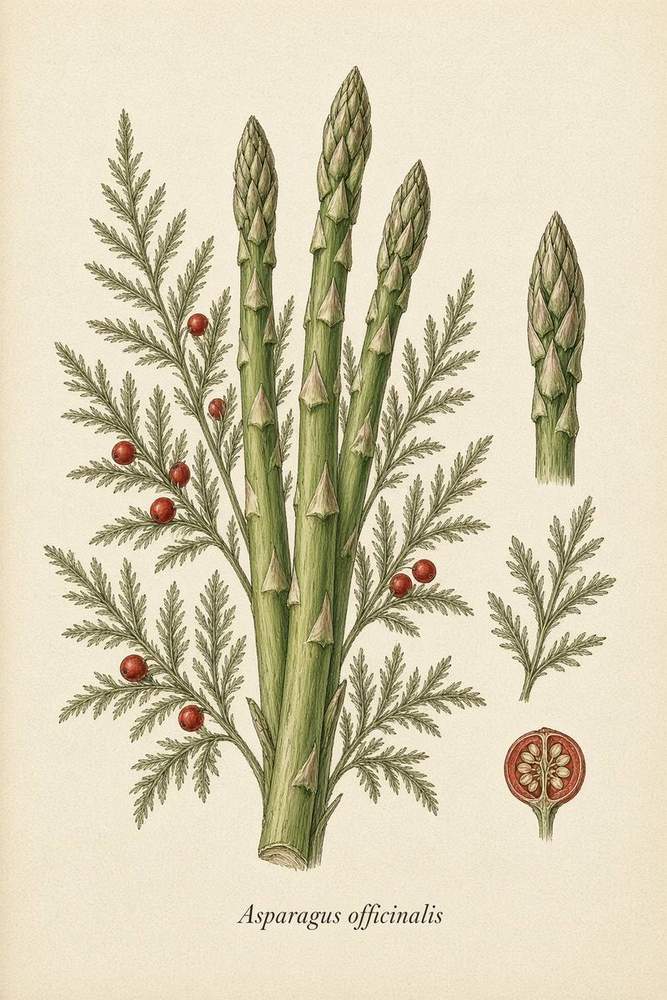
Asparagus
Asparagus officinalis
Asparagaceae
A patient perennial — you wait two years, then eat the spears for a month each spring for twenty more.
Young cooked spears are food. The berry of the mature fern is not a snack.
- Parts used
- Young spear
- Traditional notes
- Spring kitchen · Traditional tonic green of the first cutting
- Grow · USDA 6b
- Perennial, USDA 3–8 (with snow) to 9 with care Crowns are faster than seed. Do not harvest year one; a light year two. In work: Apr · May · Jun
- Harvest
- Spears finger-thick, 6–8 inches, for 4–6 weeks in a mature bed. Then let it fern.
- Let it fern after the harvest window. That is next year’s fuel.
- Male plants (named hybrids) throw fewer seedlings.
Safety
The berry Known asparagus allergy (uncommon)
Companions
Plant with Orange daylily, Parsley, Tomato.
Keep apart from Garlic, Onion.
Lore
Roman writers already fussed over it. The name is Greek asparagos. Medieval Europe forgot it; French gardens brought it back as a luxury. The urine smell is methanethiol in people with the genes to notice it — a party trick, not a diagnosis. White asparagus is a mound of dirt, not a different species.
The Herbarium — a teaching catalog, not a clinic. Traditional use is history, not a prescription. USDA 6b dates are a week either way, not a promise. Do not eat, drink, or harvest a plant you cannot name.