The Herbarium
Part IV · Fruit & vegetable
Herb. No. 206
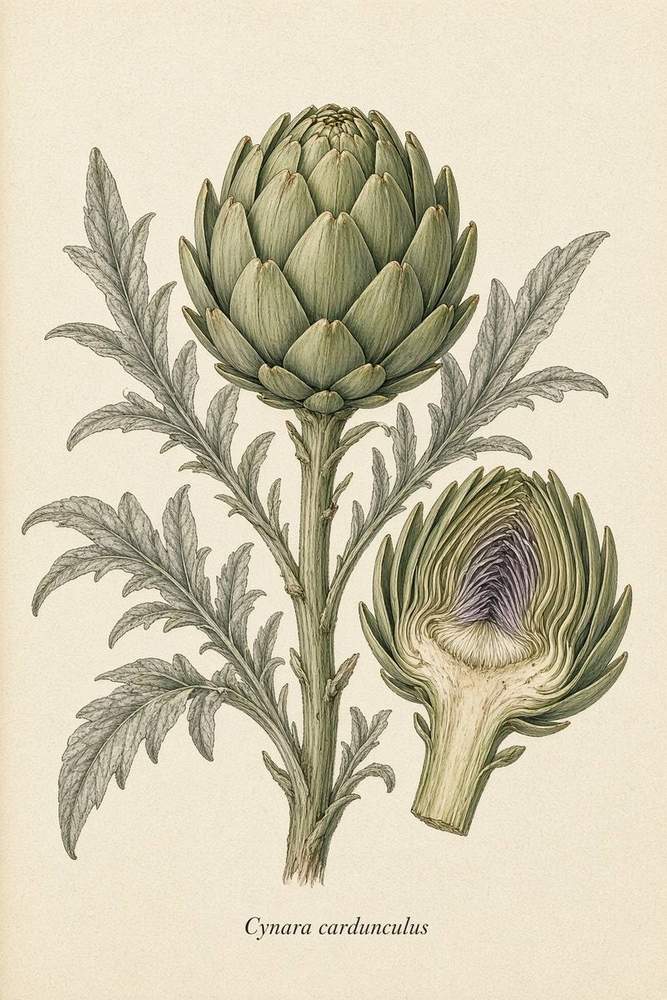
Artichoke
Cynara cardunculus var. scolymus
Asteraceae
A giant thistle grown for the flower bud — you eat the bract bases and the heart, and throw away the choke.
Cooked flower head is food. The choke (immature florets) is fiber you do not swallow. Cardoon is the same species for the stem.
- Parts used
- Immature flower head (bracts and heart)
- Traditional notes
- Kitchen thistle · Traditional Mediterranean vegetable · A bitter-green folklore at food dose
- Grow · USDA 6b
- Perennial USDA 7–10; annual from a start north, or a heavy mulch. Starts, or seed of named types. Green Globe is the old coastal stand. In work: May · Jun · Jul
- Harvest
- Buds tight, before the bracts splay into a flower.
- Cut with a stub of stem.
- Once it flowers, that bud is a bee, not a supper.
Safety
Swallowing the choke Ragweed-family allergy if you react to the plant
Companions
Plant with Nasturtium.
Lore
Arabic al-khurshuf became Italian carciofo and English artichoke. Catherine de’ Medici is blamed for bringing it to France, which is how all vegetables seem to travel in the stories. The choke is just the flower, impatient. Cardoon is the same species grown for the bleached stem — a different supper from the same thistle.
The Herbarium — a teaching catalog, not a clinic. Traditional use is history, not a prescription. USDA 6b dates are a week either way, not a promise. Do not eat, drink, or harvest a plant you cannot name.