The Herbarium
Part IV · Fruit & vegetable
Herb. No. 207
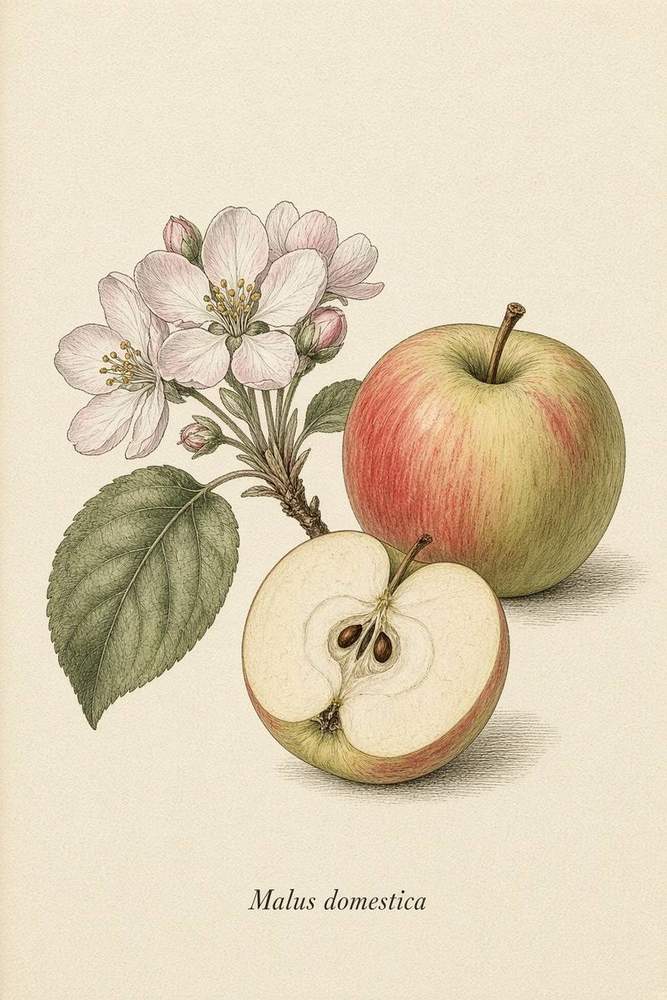
Apple
Malus domestica
Rosaceae
The temperate orchard fruit — cider, pie, a pocket, and a folklore about doctors that is older than the clinic.
Ripe fruit is food. Seeds in quantity contain a cyanide glycoside — do not make a tea of the pips. Wild crab is tart, not a mystery.
- Parts used
- Ripe fruit
- Traditional notes
- Kitchen fruit · Cider · Traditional winter keeping fruit
- Grow · USDA 6b
- Tree, USDA 4–8 for most dessert types; cider types similar A grafted named tree. Seedlings are a genetic raffle. In work: Aug · Sep · Oct
- Harvest
- When the stem parts with a lift, not a yank. Flavor finishes on the tree for many types.
- Two varieties for pollination unless it is a listed self-fertile.
- Fire blight and scab are regional. Buy for your county, not a catalog photo.
Safety
A pip tea Known apple allergy (sometimes with birch pollen)
Companions
Plant with Chives, Comfrey, Garlic, Nasturtium, Yarrow.
Lore
Kazakh Almaty is ‘father of apples.’ The Silk Road did the rest. English cider is a fermented agriculture, not a juice box. ‘An apple a day’ is 19th-century marketing that outlived the original rhyme about paying the doctor. Newton’s apple is a better story than a better fruit.
The Herbarium — a teaching catalog, not a clinic. Traditional use is history, not a prescription. USDA 6b dates are a week either way, not a promise. Do not eat, drink, or harvest a plant you cannot name.