The Herbarium
Part I · Medicinal herbs
Herb. No. 167
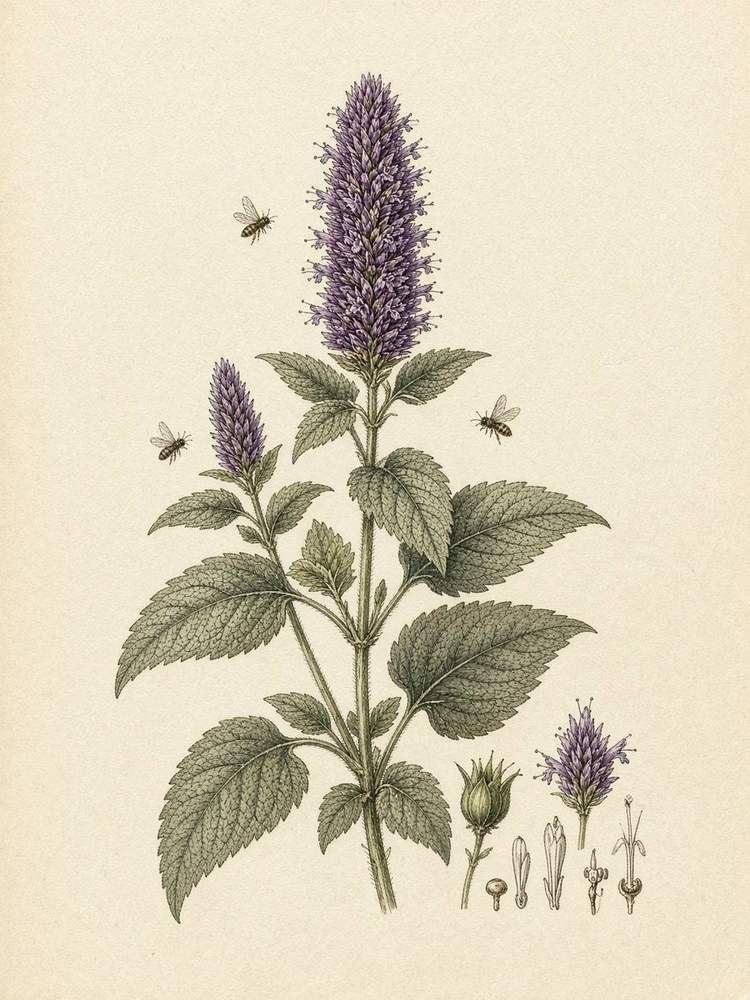
Anise hyssop
Agastache foeniculum
Lamiaceae
A prairie mint that smells of licorice and basil — a bee spike, a tea, and a name that lies in two directions.
Culinary and tea leaf. Not garden hyssop (Hyssopus) and not anise (Pimpinella).
- Parts used
- Leaf · Flowering tops
- Traditional notes
- Kitchen tea · After a sweet meal · Bee forage
- Grow · USDA 6b
- Short-lived perennial, USDA 4–9, often grown as an annual Seed on the surface, or a nursery plant. Easy. In work: Jun · Jul · Aug · Sep
- Harvest
- Leaf anytime; spikes as they color.
- Leave some spikes. The bees paid rent.
- Dried keeps the licorice if you hang it fast.
Safety
Mint-family allergy
Companions
Plant with Bee balm, Borage, Calendula, Cornflower, Cosmos, French marigold.
Lore
The Dakota and neighboring nations used Agastache as a tea and a sweetener of other medicines. Foeniculum in the Latin is a botanist smelling fennel. English ‘anise hyssop’ is a market stall with a short pencil. The plant is American. The name is a European cupboard reaching.
The Herbarium — a teaching catalog, not a clinic. Traditional use is history, not a prescription. USDA 6b dates are a week either way, not a promise. Do not eat, drink, or harvest a plant you cannot name.