The Herbarium
Part I · Medicinal herbs
Herb. No. 140
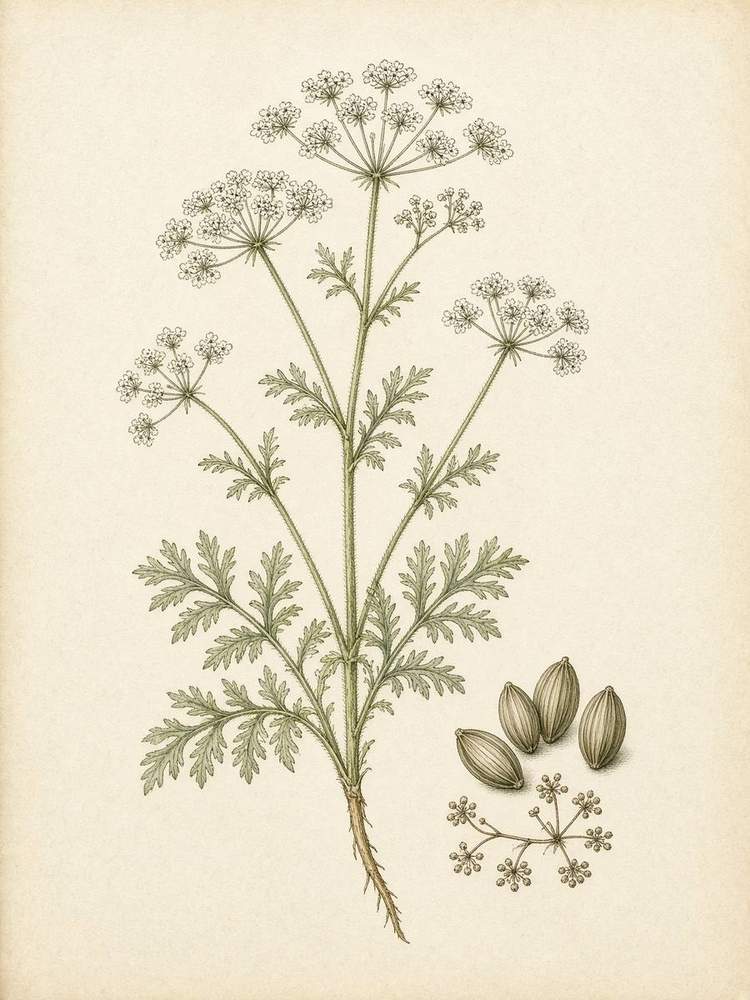
Anise
Pimpinella anisum
Apiaceae
The licorice seed of Mediterranean baking — a carminative kitchen spice, not the toxic Japanese lookalike of star anise.
Culinary seed. Identify carefully among umbels. Star anise is a different plant on another plate.
- Parts used
- Ripe seed
- Traditional notes
- Kitchen spice · After-meal seed · Traditional colic folklore
- Grow · USDA 6b
- Hot-season annual. Needs a long summer. Direct-sow in warm soil. Resents transplanting. In work: May · Jun · Jul · Aug · Sep
- Harvest
- Umbels when they tan; bag or they shatter.
- Keep away from fennel if you save seed.
- A cold year is a green plant and no spice.
Safety
Unidentified wild Apiaceae Estrogen-sensitive conditions at high extract dose
Lookalikes
- Star anise — Illicium and Pimpinella share a flavour and not a family. Japanese star anise is a toxic cousin of the Chinese spice — buy named culinary star anise, never a wild Illicium.
Lore
Pythagoras advised anise to keep a clear head. Romans stuffed it into mustaceum, a spiced wedding cake, which is why a modern wedding still tastes of this seed if the baker is old-fashioned. The word is Egyptian via Greek. Mice, the old books insist, will not stay where it is scattered — a claim no mouse has confirmed.
The Herbarium — a teaching catalog, not a clinic. Traditional use is history, not a prescription. USDA 6b dates are a week either way, not a promise. Do not eat, drink, or harvest a plant you cannot name.