The Herbarium
Part I · Medicinal herbs
Herb. No. 169
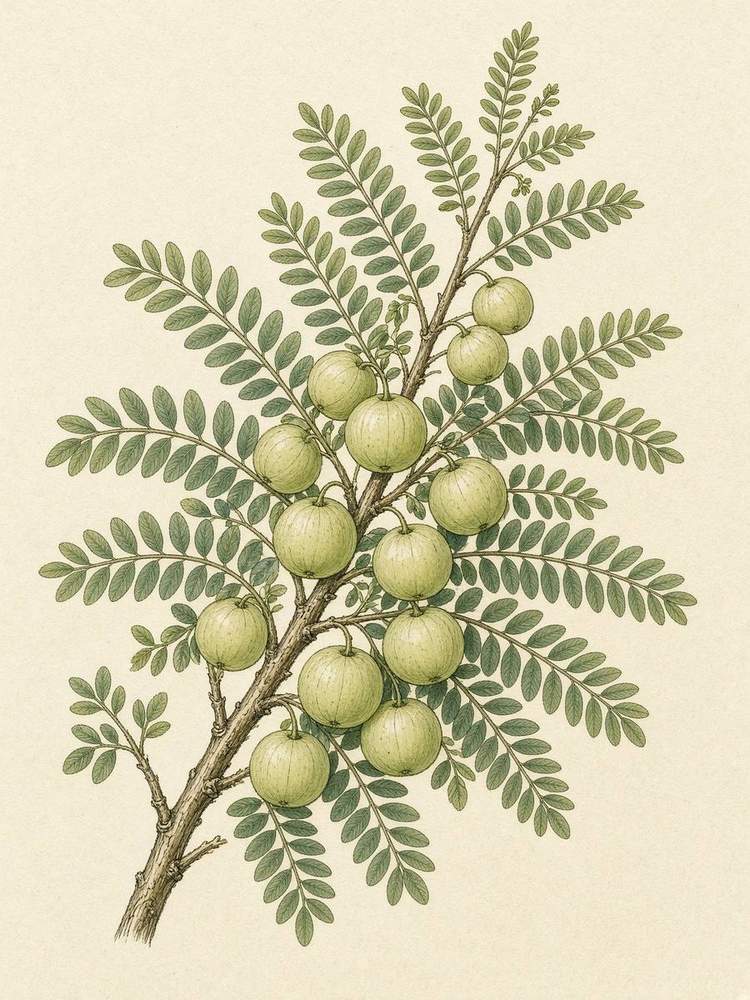
Amla
Phyllanthus emblica
Phyllanthaceae
Indian gooseberry — a sour, tannic fruit that Ayurveda treats as a rasayana, and that kitchens pickle in sugar and spice.
Culinary sour fruit. A cornerstone of triphala. Fresh fruit is seasonal; most kitchens meet it dried or as a murabba.
- Parts used
- Fruit
- Traditional notes
- Kitchen sour and preserve · Traditional recovery food · Triphala component
- Grow · USDA 6b
- Tropical tree, USDA 10–12; greenhouse north A nursery tree if you have a climate. Most kitchens buy the fruit. In work: Oct · Nov · Dec · Jan
- Harvest
- Fruit when fully sized, still hard, in the tropical winter.
- A jar of dried amla is the honest harvest north.
- The aftertaste turning sweet is the old quality test.
Safety
Very large tannin doses on an empty ulcerated gut
Lore
Sanskrit āmalaki. It is said to contain a dwelling of Lakshmi, which is a lot of goddess for a sour marble. Charaka lists it as a rasayana. The British called it gooseberry because they needed a word. Triphala is three fruits arguing in one powder; this is the sour one.
The Herbarium — a teaching catalog, not a clinic. Traditional use is history, not a prescription. USDA 6b dates are a week either way, not a promise. Do not eat, drink, or harvest a plant you cannot name.