The Herbarium
Part VII · Toxic
Herb. No. 043
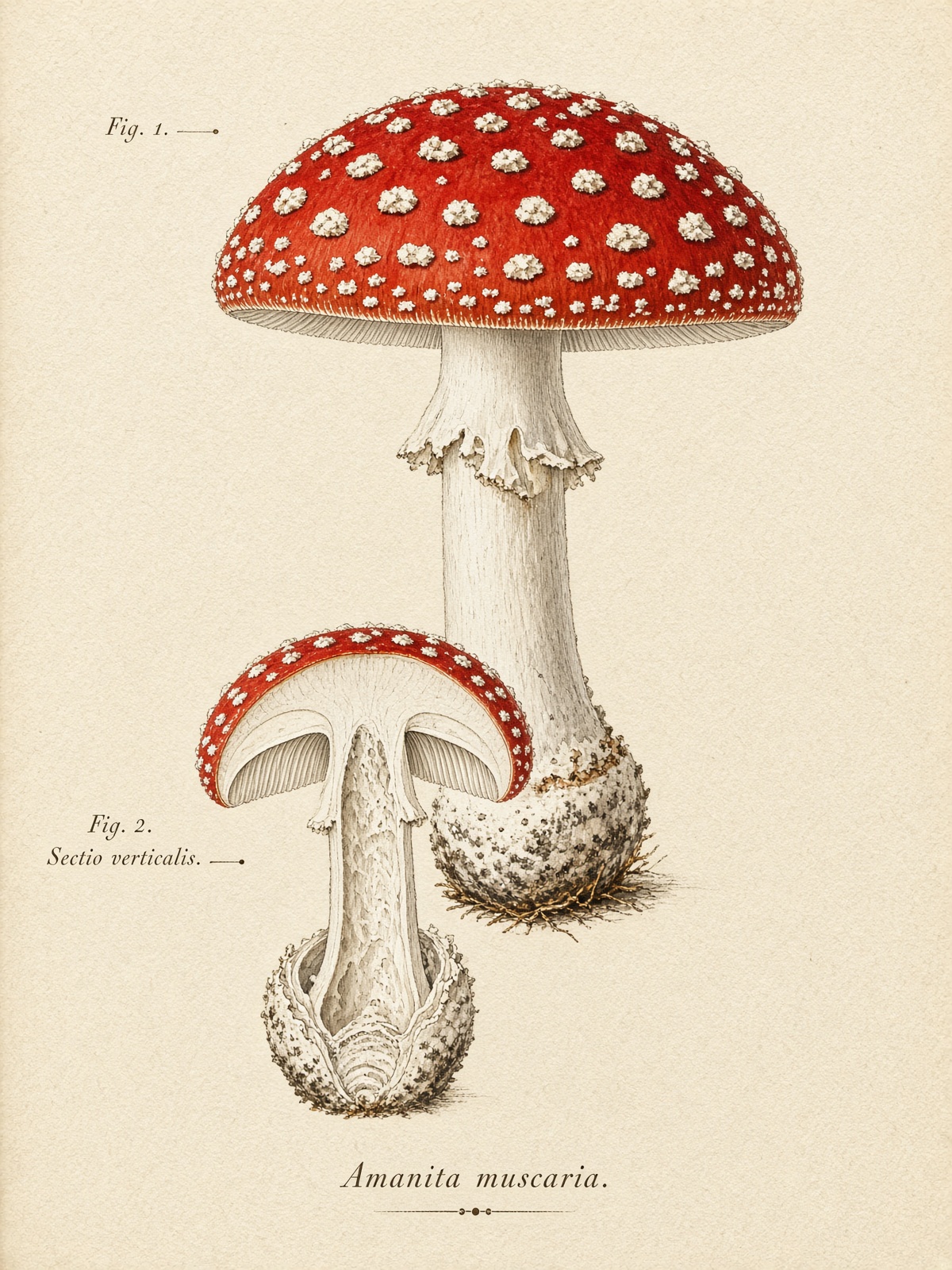
Fly agaric
Amanita muscaria
Amanitaceae
The red fairy-tale mushroom — a deliriant poison with a folk-intoxicant history, not a gentle psychedelic.
Not a US Schedule I mushroom (its actives are muscimol and ibotenic acid, not psilocybin). Still toxic, sometimes locally restricted as a sold intoxicant, and easy to confuse with deadly Amanita species.
- Parts used
- Cap — not recommended
- Traditional notes
- Siberian folk intoxicant · Insecticidal fly-trap in milk (the common name)
- Habitat only
- Mycorrhizal with birch, pine, spruce across the boreal and temperate north. Cannot be fruitfully 'grown' like oyster mushrooms; it needs a living tree partner.
- Mycorrhizal with trees. You do not grow it on a block like oyster.
- Do not taste it to ID it. Preparation folklore is how people are hospitalized.
- A poison-garden teaching fungus — leave it in the birch and pine.
Safety
Any recreational or self-medicating use Foraging without expert mycology
Lookalikes
- Button mushroom — A white or orange cap in grass is not Agaricus. Fly agaric and its deadly cousins still get eaten by people who trusted a photograph.
Lore
Fly agaric — the red toadstool of fairy illustrations and a Siberian shamanic record. Muscimol is not psilocybin, and the vomiting is not optional folklore. Poison-garden, not a tea.
The Herbarium — a teaching catalog, not a clinic. Traditional use is history, not a prescription. USDA 6b dates are a week either way, not a promise. Do not eat, drink, or harvest a plant you cannot name.